
 Mary Kelly
Korean beef bowls are a flavorful, satisfying dish, and with the right pairings, you can elevate the experience even further. Start with a solid base of rice—sticky white rice is traditional, but brown rice offers a heartier option, while cauliflower rice works well for a low-carb alternative.
For added texture and nutrition, incorporate vegetables like sliced cucumbers, pickled radishes, or steamed broccoli. These not only add crunch but also bring a burst of color to your bowl. A soft-boiled egg with a runny yolk is a great addition, adding richness and creaminess that complements the beef perfectly.
To truly embrace the Korean flavors, a side of kimchi is essential. Its tangy, spicy kick pairs wonderfully with the savory beef, adding an authentic zing to the dish. If you want to intensify the flavor even more, drizzle extra soy sauce or kimchi paste over the bowl for an extra burst of savory goodness.
These pairings not only complement the Korean beef but also create a well-rounded, authentic meal that’s packed with texture, flavor, and nutrition.
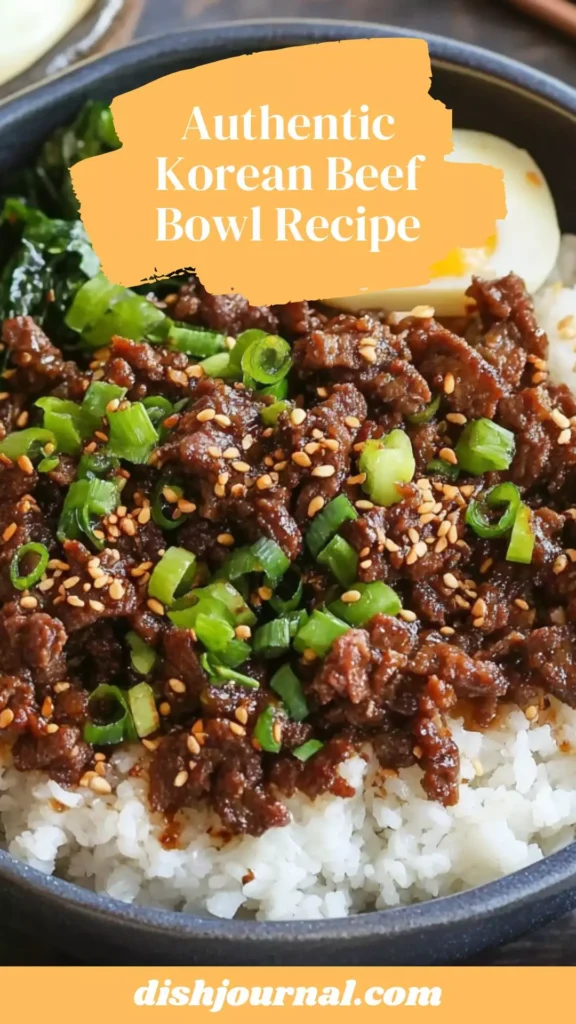
If you’ve ever strolled through a bustling Korean street market or sat down at your favorite Korean barbecue joint, you’ll understand the allure of warm, flavorful dishes that light up your taste buds.
Today, we’re diving into one of my favorites—the authentic Korean beef bowl. Often found in cozy corners of food streets or shared at family gatherings, this dish represents comfort, culture, and, most importantly, flavor.
In the paragraphs that follow, I’ll guide you through making an authentic Korean beef bowl from scratch, sharing insights and tips I’ve gathered over my culinary journey as a registered dietitian and food enthusiast.
What is an Authentic Korean Beef Bowl?
At its core, an authentic Korean beef bowl is a delightful medley that combines seasoned ground beef, often served over rice, garnished with fresh vegetables, and finished with flavorful sauces. Australian avocado greens may be a trendy topping, but trust me, you’ll want to keep it traditional.
This dish usually centers around bulgogi, marinated beef cooked to tender perfection, making it a staple in Korean cuisine. It’s rich, savory, a bit sweet, and downright satisfying! The beauty of a beef bowl lies in its simplicity, yet every bite tells a story of Korean culinary tradition.
How Does It Taste?
Imagine a glorious combination of savory, sweet, and slightly spicy flavors harmonizing on your palate. The beef is often marinated, which infuses it with a complex taste that hits all the right notes.
When cooked, it achieves a tender, juicy texture with a caramelized exterior, creating an enjoyable contrast when paired with rice. Fresh garnishes, such as green onions and sesame seeds, tie everything together, adding both crunch and visual appeal.
Why You’ll Love This?
This dish beckons for a few reasons. First, it’s incredibly quick to prepare, making it perfect for busy weeknights.
Second, it’s versatile; you can adjust levels of spice, sweetness, and toppings to suit individual tastes.
Lastly, cooking authentic Korean beef offers a fun way to explore Korean flavors, inviting culinary curiosity into your kitchen.
Ingredients
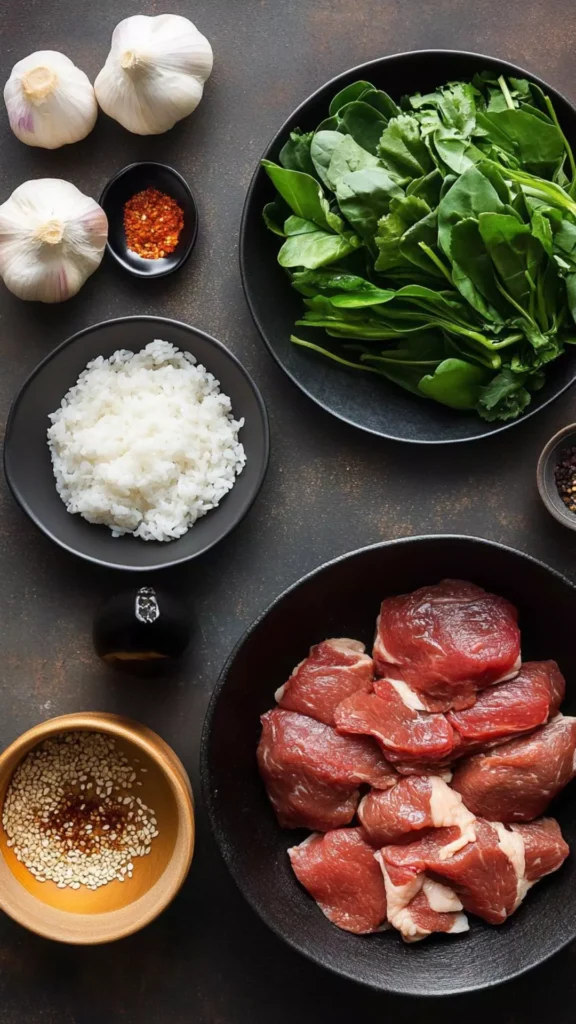
To make an authentic Korean beef bowl, gather the following ingredients:
- 1 tablespoon canola oil
- 3 cloves garlic, finely chopped
- 1 pound ground beef
- ¼ cup low-sodium soy sauce
- ¼ cup dark brown sugar, firmly packed
- 2 teaspoons toasted sesame oil
- ½ teaspoon red pepper flakes, or to taste
- ¼ teaspoon ground ginger powder
- 2 green onions, finely chopped
- ¼ teaspoon roasted sesame seeds
- 1 tablespoon rice vinegar
- 1 tablespoon hoisin sauce
Step-by-Step Directions
Creating your own Korean beef bowl may seem daunting, but I assure you it’s quite straightforward. Let me break it down step-by-step.
Step 1: Prepare the Marinade
In a bowl, whisk together the soy sauce, dark brown sugar, sesame oil, rice vinegar, hoisin sauce, red pepper flakes, and ground ginger. This mixture is the heart of flavor for your beef.
Step 2: Cook the Aromatics
Heat the canola oil in a large skillet over medium heat. Add the chopped garlic and sauté until it’s just golden. This will give your beef an aromatic foundation.
Step 3: Brown the Beef
Increase the heat to medium-high and add the ground beef into the pan. Break it up with a spatula while it cooks. Aim for a nice browning, as it adds depth to the dish.
Step 4: Incorporate the Marinade
Once the beef is browned and cooked through, pour the marinade over the meat. Stir well to coat everything in the luscious sauce. Cook for an additional 2-3 minutes so that the flavors meld beautifully.
Step 5: Garnish and Serve
Finally, turn off the heat, and mix in the green onions. Serve the beef over your prepared rice, garnished with roasted sesame seeds, and additional green onions if desired.
Tips on Making Authentic Korean Beef Bowl
Here are five essential tips to enhance your cooking experience:
- Quality of Beef: Choose lean ground beef for a healthier option. You can also experiment with ground turkey or chicken for a lighter take.
- Marination Time: While you can cook immediately, letting the beef marinate for at least 30 minutes amplifies the flavors significantly.
- Rice Cooking: For the perfect rice, rinse it under cold water prior to cooking until the water runs clear. This step removes excess starch and helps achieve that desirable sticky texture.
- Vegetable Variety: Feel free to enhance your bowl with a mix of colorful veggies. Carrots, bok choy, or even avocado can add fun textures and flavors.
- Spice It Up: If you enjoy heat, don’t hesitate to increase the red pepper flakes or even add some gochujang (Korean chili paste) for an extra punch.
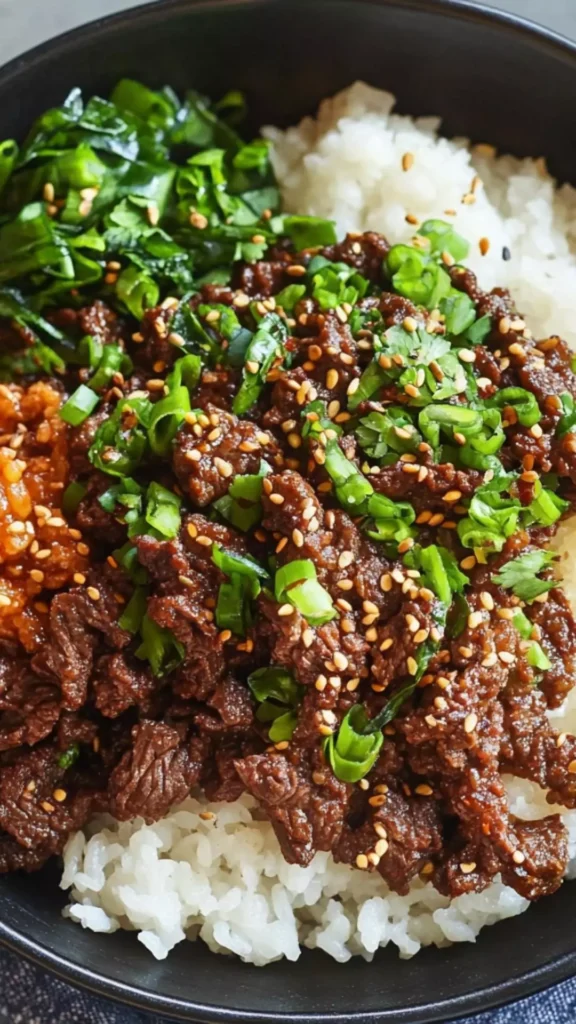
How Do You Store This Authentic Korean Beef Bowl?
Leftovers? No problem! Store any uneaten portions in an airtight container in the refrigerator. It should keep well for about 3-4 days. When you’re ready to enjoy it again, reheat the beef gently on the stove or in the microwave. If you find the rice is dried out, sprinkle a little water on it before warming to keep it fluffy.
What Other Substitutes Can You Use in Authentic Korean Beef Bowl?
Feeling creative? Here are a few alternatives you can try:
- Ground Pork: For a different flavor profile, opt for ground pork instead of beef. It maintains the juiciness while offering a unique taste.
- Cauliflower Rice: Swap traditional rice for cauliflower rice to cut down on carbs without sacrificing volume.
- Soy-Free Sauce: For a soy-free option, look for coconut aminos or other soy sauce alternatives to maintain that umami flavor without the soy.
- Vegan Beef: If you’re leaning toward a plant-based dish, use textured vegetable protein (TVP) or a store-bought meat alternative, seasoned the same way.
- Chili Garlic Paste: If you enjoy more heat than the traditional recipe provides, adding chili garlic paste can kick it up a notch.
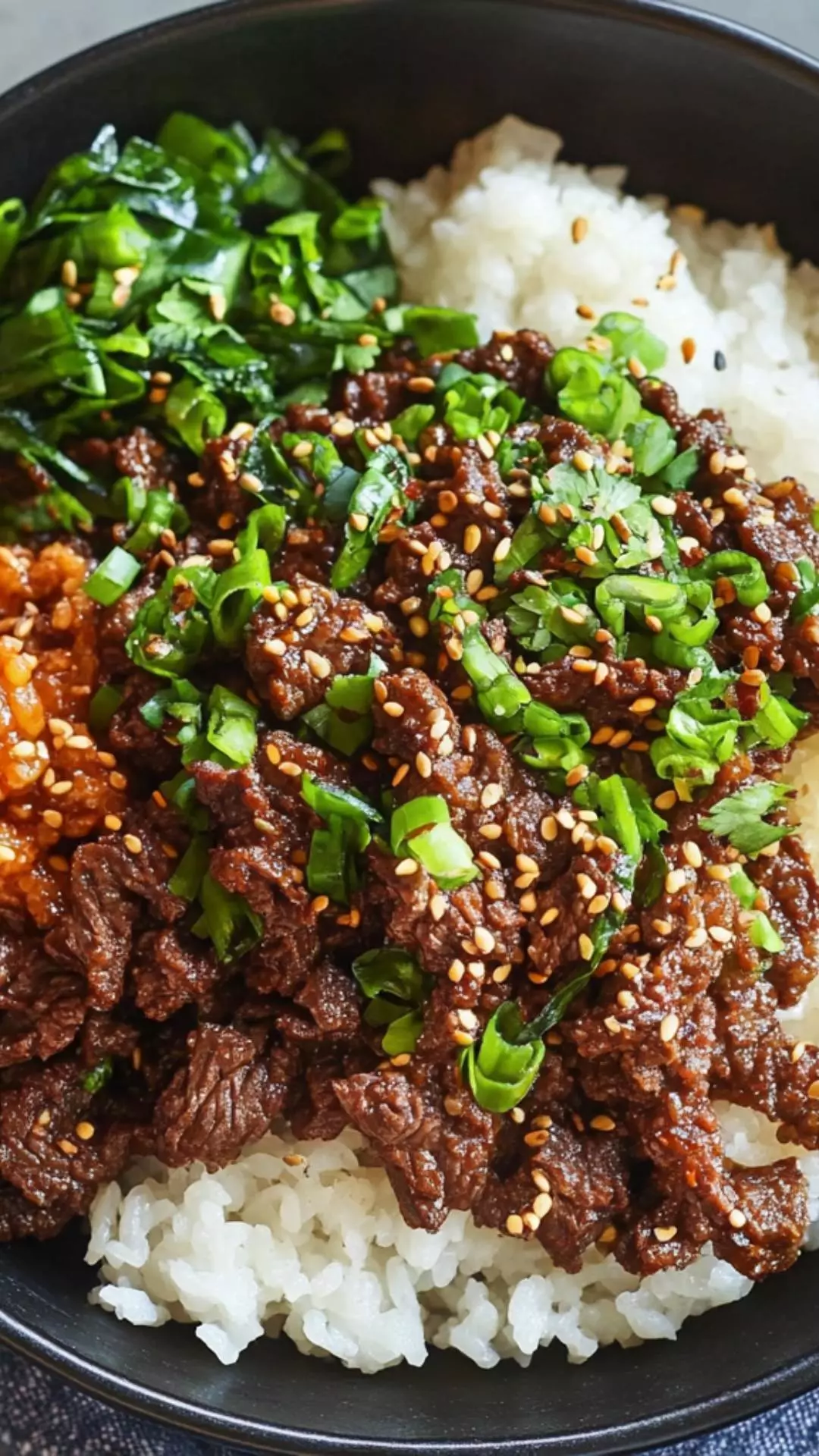

Authentic Korean Beef Bowl Recipe
Ingredients
Equipment
Method
- In a bowl, whisk together the soy sauce, dark brown sugar, sesame oil, rice vinegar, hoisin sauce, red pepper flakes, and ground ginger. This mixture is the heart of flavor for your beef.
- Heat the canola oil in a large skillet over medium heat. Add the chopped garlic and sauté until it’s just golden. This will give your beef an aromatic foundation.
- Increase the heat to medium-high and add the ground beef into the pan. Break it up with a spatula while it cooks. Aim for a nice browning, as it adds depth to the dish.
- Once the beef is browned and cooked through, pour the marinade over the meat. Stir well to coat everything in the luscious sauce. Cook for an additional 2-3 minutes so that the flavors meld beautifully.
- Finally, turn off the heat, and mix in the green onions. Serve the beef over your prepared rice, garnished with roasted sesame seeds, and additional green onions if desired.
Nutrition
Notes
- Quality of Beef: Choose lean ground beef for a healthier option. You can also experiment with ground turkey or chicken for a lighter take.
- Marination Time: While you can cook immediately, letting the beef marinate for at least 30 minutes amplifies the flavors significantly.
- Rice Cooking: For the perfect rice, rinse it under cold water prior to cooking until the water runs clear. This step removes excess starch and helps achieve that desirable sticky texture.
- Vegetable Variety: Feel free to enhance your bowl with a mix of colorful veggies. Carrots, bok choy, or even avocado can add fun textures and flavors.
- Spice It Up: If you enjoy heat, don’t hesitate to increase the red pepper flakes or even add some gochujang (Korean chili paste) for an extra punch.
Tried this recipe?
Let us know how it was!Frequently Asked Questions
Conclusion
Cooking an authentic Korean beef bowl is not just about following a recipe; it’s about experiencing the joy and warmth a simple dish can bring.
With its vibrant flavors, adaptable ingredients, and nourishing qualities, it’s no wonder this dish has captured the hearts (and stomachs) of so many.
I hope my tales and tips inspire you to bring this delightful meal into your kitchen. Trust me, once you try this dish, it’ll become a staple in your home, just as it has in mine.
Dive into this cultural experience, savor each bite, and enjoy the wonderful flavors that are both familiar and exciting!


