
Ingredients
Equipment
Method
Step 1: Prepare the Ingredients
- Start by gathering all your ingredients. Ensure your veggies are washed and chopped. This makes the cooking process smooth. You don’t want to be scrambling around for ingredients while your noodles overcook. Trust me, I’ve been there—once, I was frantically searching for cabbage in the fridge as my noodles sat angrily on the stove.
Step 2: Cook the Chicken
- Heat 1 tablespoon of vegetable oil in a large skillet over medium-high heat. Season your chicken breasts with salt and pepper. Sauté the chicken in the skillet until browned and cooked through, about 5-7 minutes per side. Ensure it reaches an internal temperature of 165°F. Transfer the cooked chicken to a chopping board and let it rest for a few minutes before slicing it into bite-sized pieces.
Step 3: Sauté Vegetables
- In the same skillet, add the remaining 2 tablespoons of vegetable oil. Increase the heat to high. Toss in the chopped white parts of the green onions, minced garlic, and grated ginger. Sauté for about a minute until fragrant—this is where the magic begins! Next, add the shredded cabbage, carrot, and chopped celery. Stir-fry the vegetables for 3-4 minutes until they’re vibrant and slightly tender.
Step 4: Add Noodles
- If you’re using refrigerated yakisoba noodles, simply separate and add them directly to the skillet. If you're using dried chow mein noodles, follow the package instructions to cook them before adding them to the skillet. Toss everything together to combine, creating a colorful medley.
Step 5: Mix the Sauce
- In a small bowl, whisk together the soy sauce, oyster sauce, sesame oil, rice vinegar, cornstarch, and brown sugar. Stir until well combined. This sauce is the heart of your chow mein. It embodies the harmonious blend of flavors that will tie each ingredient together.
Step 6: Combine Everything
- Pour the sauce over the noodle and vegetable mixture. Stir gently but thoroughly so that every strand of noodle is coated with this delightful concoction. If you like a bit of heat, add a teaspoon (or two) of Asian garlic chili sauce at this point.
Step 7: Add Chicken and Crunch
- Just before serving, fold in the sliced chicken and top with fresh bean sprouts. Sprinkle toasted sesame seeds and the green parts of the chopped green onions on top for an extra pop of flavor and color. You can almost hear the sizzle as you plate it up!
Step 8: Serve and Enjoy
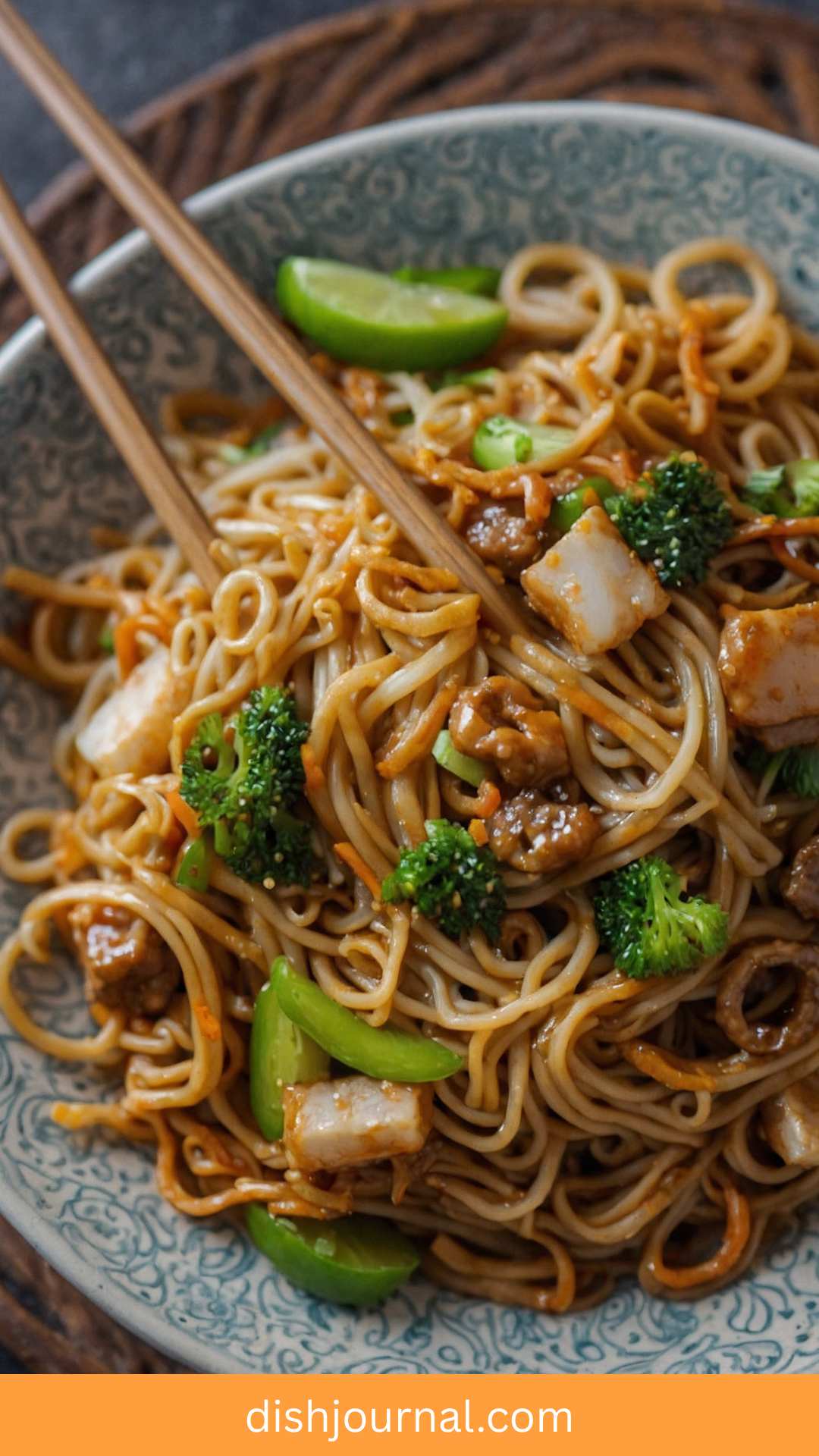
- Your easy chow mein is ready to be served! Pair it with your favorite spring rolls or a side salad. Just like that, you have a colorful, delicious meal that’s guaranteed to impress.
Nutrition
Notes
Prep Ahead: Chop your vegetables the day before to save time.
Leftover Chicken: If you have leftover rotisserie chicken, you can use that instead, cutting down on your cooking time.
Make it Spicy: For those who love a kick, don’t hesitate to dial up the chili sauce.
Veggie Boost: Add broccoli, bell peppers, or snap peas for extra nutrition and crunch.
Cooking Noodles: If using dried noodles, don’t rinse them after cooking. The starch helps the sauce cling.
Leftover Chicken: If you have leftover rotisserie chicken, you can use that instead, cutting down on your cooking time.
Make it Spicy: For those who love a kick, don’t hesitate to dial up the chili sauce.
Veggie Boost: Add broccoli, bell peppers, or snap peas for extra nutrition and crunch.
Cooking Noodles: If using dried noodles, don’t rinse them after cooking. The starch helps the sauce cling.